Most visitors look for rental cars in Nassau, Bahamas, to explore beyond resort areas and move around the islands more freely. Whether you are wondering about the Bahamas speed limit or what side of the road to drive on, driving in Nassau, Bahamas, is easier than you think.
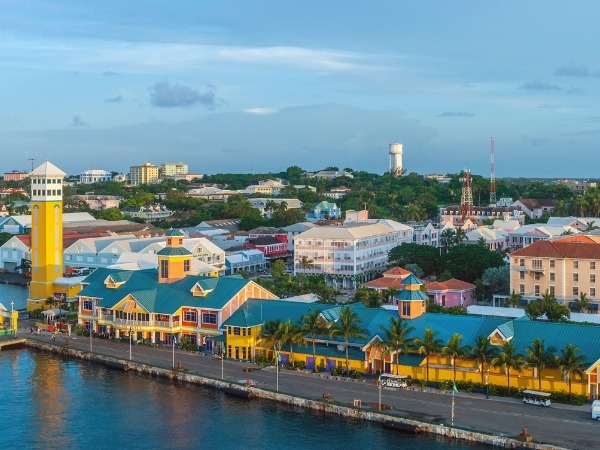
Here's an overview of driving rules in the Bahamas.
When traffic lights are operating, they override any conflicting signs or markings. If a police officer is directing traffic, their instructions take priority over all other controls.
In the Bahamas, vehicles drive on the right. Drivers should remain on the left unless overtaking or directed otherwise. Pay attention to road markings such as stop lines, pedestrian crossings, and zig-zag markings near crossings. Look for important signs like STOP, Give Way, No Entry, and speed limits.
Visitors can usually drive in the Bahamas using a valid foreign driving licence for up to 3 months. If you plan to stay longer than that period, you must obtain a local Bahamian driving licence. If your licence is not in English, carry an International Driving Permit as a supporting document.
When driving in the Bahamas, you must have certain documents. These include your valid driving licence and proof of current vehicle insurance. Police officers may request these documents during a roadside check. Keep your passport or another form of identification with you while travelling.
Keep important papers together, including your licence, insurance documents, and rental agreement if you are using a hired vehicle. Before starting the car, adjust your seat and mirrors, fasten your seat belts, and set navigation.
Speed limits in the Bahamas are shown in miles per hour, and drivers must always follow posted signs because they override default limits.
In most areas, the typical limits are easy to remember. Within Nassau city limits and most settlements, the speed limit is usually 25 miles per hour. Outside city limits, it is often 30 miles per hour unless another limit is posted. On roads outside settlements, the limit is commonly 45 miles per hour. Always watch for local signs, as there are special limits in certain areas.
School zones require extra caution. Drivers must slow down, obey warning signs, and stop when crossing guards signal. Overtaking is not allowed in these areas because of pedestrian safety.
Maintain a safe following distance from the vehicle ahead. Leave at least 2 seconds on dry roads and increase this distance in rain or poor visibility.
Roundabouts are common and follow left-side driving rules. Traffic moves clockwise, and vehicles already in the roundabout have priority. When entering, give way to traffic approaching from your right and only enter when your exit is clear. Choose the correct lane early and avoid sudden lane changes while inside the circle.
Overtaking must be done carefully and usually occurs on the right side of the vehicle ahead. Passing is not allowed near junctions, pedestrian crossings, bends, or hills where visibility is limited. Road markings also control overtaking. Double solid white lines must never be crossed, and zig-zag markings near crossings mean overtaking is prohibited.
Use indicators clearly when approaching roundabouts and junctions. Signal left for a left turn, right for a right turn, or full circle, and signal left again when exiting. Road markings are important in the Bahamas, with white centre lines guiding traffic flow and edge lines marking the road boundary.
Parking laws in the Bahamas are linked to safety and traffic flow. Poor parking can block roads or create hazards, and illegal parking may result in fines or vehicle removal. Yellow kerb lines are important indicators. A single yellow line usually means no waiting during certain hours, while a double yellow line means no waiting at any time.
Visitors are often fined for simple mistakes such as stopping on zig-zag lines near pedestrian crossings, blocking entrances, or leaving vehicles where traffic cannot pass easily. Parking is not allowed on pedestrian crossings, junctions, or roundabouts. Always park close to the kerb and in the same direction as traffic.
Using a handheld phone while driving in the Bahamas is prohibited. Drivers must not hold a phone to call, text, or browse. Hands-free use is only allowed if it does not distract from driving. Violations can lead to fines and demerit points. Unlike many countries, the Bahamas does not have road tolls.
Driving in the Bahamas is easier when you keep a few key things in mind. Stay on the left, follow the posted Bahamas speed limit, and be cautious at roundabouts.
Looking for rental cars in Nassau, Bahamas? Rent with Final Rentals to explore the islands comfortably and travel beyond the usual tourist spots. Select your pickup location, enter your travel dates, and choose a vehicle for your trip. Book and manage your car rental at any time. Download the Final Rentals app on Google Play and the App Store.
No, you cannot drive directly to the Bahamas from the US or any other country because it is an island nation. The best way to get there is by flying or taking a cruise. Once you arrive, you can easily book rental cars in Nassau, Bahamas, to explore the islands at your own pace.
In the Bahamas, you must drive on the left side of the road. However, you will notice that many rental cars are imported from the United States and have the steering wheel on the left side. While this might feel slightly different at first, most tourists get used to driving in the Bahamas very quickly.
The standard Bahamas speed limit is 25 mph (miles per hour) within Nassau city limits and most settlements. Outside of the city and on highways, the speed limit is typically 45 mph. Always pay attention to local signs, as they override these default limits.
Not at all! Driving in Nassau, Bahamas is generally safe and straightforward for tourists. The roads are well-maintained, and as long as you remember to keep to the left and follow the local speed limits, you will have a smooth experience.